
Tesla Roadster: 2017 concept vs 2026 redesign
Original document analysis: matching specifications and manuals to the correct car · Editorial methods
The name Tesla Roadster can refer to the original production car, the second-generation concept unveiled in 2017, or that project’s October 2026 redesign. The latest car is not a 2017 specification sheet with a new acceleration number pasted onto it.
Compare the three references
Section titled “Compare the three references”| Topic | Original Roadster | 2017 concept | October 2026 redesign |
|---|---|---|---|
| Status | Historical production car | Second-generation concept | Demonstrated redesign; 2028 production target |
| Relevant documents | Original-car owner/service manuals | Announcement targets recalled in event coverage | October 2026 reporting and Tesla posts |
| Acceleration | Depends on original variant | Claimed 1.9 seconds to 60 mph | Reported assisted 0.81-second run; configuration targets differ |
| Battery | Original pack and upgrade history applies | Claimed 200 kWh | No current capacity established here |
| Range | Original-car specification applies | Claimed up to 620 miles | Performance target above 300 miles reported; certified range unresolved |
| Price | Historical or used-car transaction | $200,000 starting price claim | Final retail price unresolved in this review |
| Distinctive current hardware | Not the 2026 fan/thruster setup | Pre-redesign project | Suction fans, active aero and optional gas-thruster arrangements reported |
Sources: Tesla’s original Roadster document library for the original-car identity; The Verge for the 2017 targets and current website summary; Road & Track for the redesign and event timing. These are not three cars tested under a common protocol.
Original-car manuals: what “2.5” means
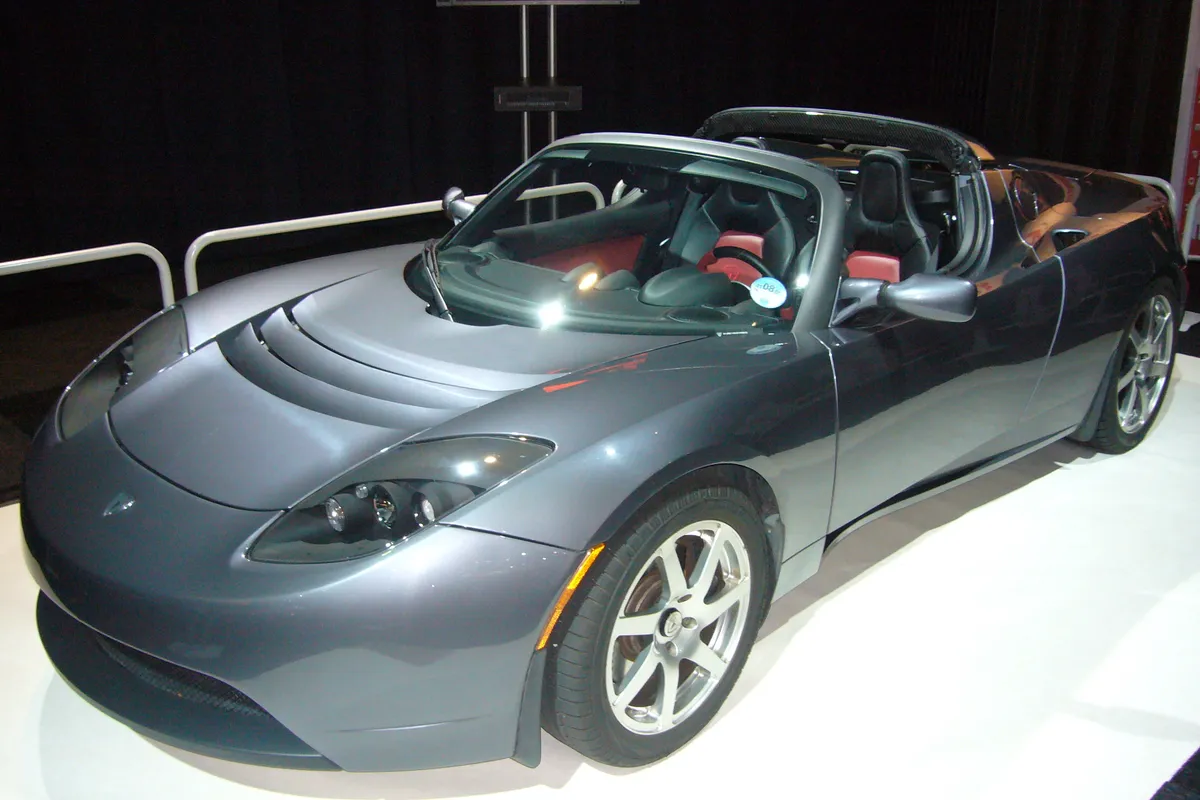
Section titled “Original-car manuals: what “2.5” means”Tesla’s service library separates 2008, 2.0 and 2.5 Roadster documents. These are versions of the original car’s documentation. “Roadster 2.5” in that library does not mean the second-generation project newly shown in 2026.
That distinction matters when searching for charging instructions or maintenance information. An original-car manual can be useful for an original-car owner while providing no support for the new car’s charging connector, battery or operating modes. The original vehicle’s historical production period is covered in the first-generation history, used here as a secondary reference.
The service library also separates owner’s manuals from Disclosed Research and Development Documents. Tesla warns that the disclosed development information may not accurately reflect production models or parts. An official hosting domain therefore does not make every document a current service instruction. Check the document category and vehicle version before using a search result; the library’s 2.0/2.5 charging guide belongs to the original car.

The 2017 numbers that still circulate
Section titled “The 2017 numbers that still circulate”The Verge’s historical account recalls the 1.9-second launch, speed above 250 mph, 200 kWh battery, 620-mile range and $200,000 starting price, with deliveries expected in 2020. Those claims explain why older previews contain such a different specification set.
They do not establish today’s battery capacity, range or price. Even when the same project name survives, a redesign and revised configuration structure require new evidence. Treating the old numbers as a completed production specification would also overstate what the original announcement established.
Why 620 miles versus 300 miles is not a measured range loss
Section titled “Why 620 miles versus 300 miles is not a measured range loss”The two numbers describe different announcements. The old 620-mile figure is a concept claim; the current Performance wording is a target above 300 miles. Neither is a pair of certified results obtained under one test cycle. The newer wording is also a lower boundary, not an exact 300-mile measurement.
Subtracting 300 from 620 and announcing a 320-mile loss would manufacture a precision the sources do not provide. A defensible range comparison needs identified vehicles, a matching test method and actual results. This history table instead answers which claim belongs to which announcement.
What the 2026 redesign changes
Section titled “What the 2026 redesign changes”Road & Track describes a shift from the rounded 2017 shape to an angular wedge. The new reporting centers on the suction system and distinguishes rear launch jets from a broader maneuvering array. The Verge describes a two-seat displayed car; its configuration summary lists single-seat Rocket.
The configuration names now matter as much as the date. A range target reported for Performance cannot be extended to Rocket, and Rocket’s air maneuvers cannot be extended to Performance. Use the current specifications for dated figures and the configuration matrix for hardware boundaries.
Historical numbers are attributed to the dated event reports rather than revalidated against the inaccessible live Tesla product page. Unsupported roof and old seating details have been omitted from this revision.